

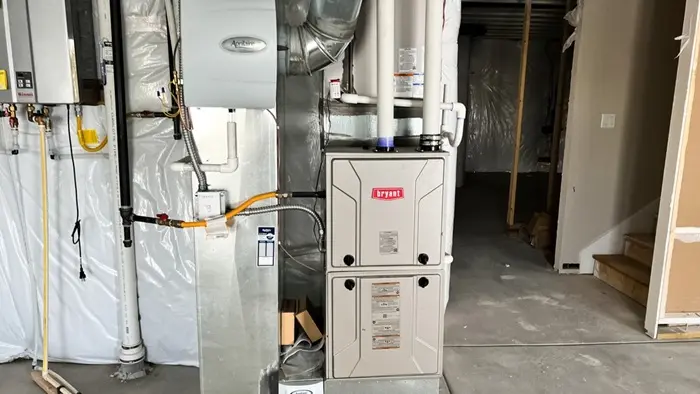
Winters in Kelowna can turn cold fast, and your furnace is basically the thing standing between you and a pretty uncomfortable house! We put together this furnace guide to cover what actually matters most: getting a quality installation from the right company, since that one decision affects everything else down the road. We’re also covering how to keep your system maintained, how to know when its age means a repair just isn’t worth it anymore, and how to use the FortisBC rebates available to gas customers. Bookmark this furnace guide for whenever your system starts acting up. We’ve got your back.
Before we dive in, here’s a quick way to check where your furnace stands right now.
Table of Contents
| Furnace Sign | What It Usually Means | What To Do |
| Furnace is under 10 years old, no recent repairs | System is likely healthy | Book annual maintenance |
| Furnace is 10 to 15 years old, occasional repairs | Aging, still repairable | Watch closely, budget for eventual replacement |
| Furnace is 15+ years old, frequent repairs | Nearing end of life | Compare repair vs replacement costs |
| Strange smells, soot, or pilot light burning yellow | Possible safety issue | Contact a licensed technician right away |
Once you know where your furnace lands on that list, the rest of this furnace guide walks through what to do about it.
What Makes a Furnace Installation Actually Good
Buying a high-efficiency furnace only gets you halfway there, and this is the part we really want you to walk away remembering. Honestly, we could write a whole furnace guide on installation quality alone, that’s how much it matters. How well that furnace performs and how long it lasts comes down to the quality of the installation, and that’s easy to miss when you’re comparing quotes side by side. A properly sized furnace matters way more than you might realize. A system that’s too big or too small for your home just won’t heat evenly, no matter how good the equipment itself is.
A contractor doing this right will come see your home in person and size the system using more than just square footage, taking things like insulation and window coverage into account. The equipment also needs to work well with your home’s duct system, and if the two don’t line up, you can end up with an uneven or noisy setup even with a great furnace. We always do a full home assessment, and our technicians will explain everything clearly, so you know exactly what’s being installed and why.
What to Ask Before You Hire an HVAC Company
We both know you’re not going to let just any technician install your furnace, and that’s a big reason we wrote this furnace guide in the first place. A few good questions beforehand can save you a ton of frustration later.
- Ask if the company is fully licensed and insured, and don’t be afraid to ask them to show proof.
- Ask whether someone will actually come look at your home before giving you a price. If a contractor is willing to quote you over the phone without really seeing anything, that’s a sign to keep looking, since a real price just can’t be judged that way.
- Ask about the workmanship warranty too, since it’s separate from the manufacturer’s warranty and it’s the part most people forget to look into. For example, we back every installation with an exclusive 12-year Ultimate Workmanship Warranty, and we train our apprentices through a partnership with ITABC so they grow into fully ticketed journeypersons.
You could also ask how long the company has been around and whether they can share references. A company that’s proud of its work has happy customers who are glad to talk about it.
Furnace Types Explained
You know that most homes here run on a gas furnace, though electric ones show up too, especially where there’s no natural gas service. Gas furnaces heat faster and usually cost less to run over time. Within gas furnaces, single-stage models run at full power any time they’re on, while two-stage and variable-speed models adjust their output to match what your home actually needs, which just means steadier, cozier heat with fewer swings.
Knowing which type you have matters because it changes what a technician checks first. Most of this furnace guide applies to standard gas furnaces, since that’s what’s most common around Kelowna, but the core maintenance and safety points hold true no matter which type you’ve got.
Why Regular Furnace Maintenance Matters
Furnace maintenance matters for comfort, but the real reason to stay on top of it is safety, and it’s a point this furnace guide won’t stop making. Furnaces burn fuel to produce heat, and that process can create carbon monoxide, a gas you can’t see or smell. A big part of a professional maintenance visit is checking the heat exchanger for cracks and making sure the vent is carrying waste gases out of the house the way it should, and that’s not something to check on your own. The one thing you can safely handle yourself is changing or cleaning the furnace filter the way the manufacturer recommends.
Our Total Comfort Plan builds two tune-ups a year right into your routine, plus a 15% discount on accessories and repairs, no overtime charges, priority scheduling, and a 10-year guarantee on covered repairs, as long as your membership stays active. Fall is the best time to book, since things get busy fast once the cold weather rolls in.
Furnace Age and What Efficiency Ratings Actually Mean
Most furnaces last 15 to 20 years with regular maintenance. As your furnace gets older, be on the lookout for a few warning signs, like cycling on and off more than usual, odd banging or rattling, uneven heat, or rising energy bills without any change in how you’re using it.
Furnace age also ties directly into efficiency. Furnaces older than 15 years typically run at an AFUE (Annual Fuel Utilization Efficiency) of 80% or less, while most furnaces sold today run between 95% and 98%. That gap is a big part of why an older furnace can cost more to run than a new one, even before you factor in repairs, and it’s exactly why this furnace guide treats installation quality and furnace age as two sides of the same coin.
Furnace Repair vs Replacement: How to Make the Right Call
A few friendly factors make this furnace repair vs replacement decision a whole lot easier:
- Age of the system. A furnace under 10 years old is usually worth repairing. One 15+ years old deserves a closer look at replacement.
- Frequency of repairs. One repair in five years is totally normal wear. Two or three in a single winter means the system is struggling.
- Cost of the repair. If a single repair costs close to half of what a new furnace would cost, you know replacement is more likely the better long-term move.
- Warranty status. New furnaces come with manufacturer warranty protection, and a proper installation adds workmanship coverage right on top of that.
Putting money into an old furnace isn’t a bad call on its own, but it stops making sense once repairs turn into a pattern instead of a one-off. That’s the kind of thinking this furnace guide keeps circling back to, the real tiebreaker between patching up an old system and starting fresh with one that’s installed right and backed by a warranty you can trust.
FortisBC Furnace Rebates You Could Qualify For
If you’re a residential FortisBC gas customer, good news, there are rebates that can help offset the cost of keeping your furnace in good shape. FortisBC currently offers a $50 rebate for having your furnace or boiler serviced by a licensed gas contractor, part of its appliance maintenance program. It’s capped at one per household and available for a limited time, so maybe it could be good to check current details before you book.
FortisBC also offers installation-related rebates on qualifying high-efficiency equipment, though the amount depends on the equipment and program at the time, and these are limited-time too. To apply for the maintenance rebate, you’ll need your FortisBC gas account number, an email address, and a scanned copy of your paid service receipt, submitted online within 60 days of the service date. Processing can take up to 90 days, and the rebate shows up as a bill credit.
Check FortisBC’s website directly before booking, since this furnace guide can’t promise the numbers won’t change between now and then.
Frequently Asked Questions About Furnace Care
What should I look for when choosing an HVAC company?
Look for a company that’s fully licensed and insured, gives you written estimates and warranties, and actually sends someone to check out your home before quoting a price. A strong workmanship warranty, like our 12-year Ultimate Workmanship Warranty, is also a great sign the company truly stands behind its work.
How often should I service my furnace?
As this furnace guide mentioned above, once a year is the standard, ideally in the fall before the heating season kicks off. Our Total Comfort Plan builds in two tune-ups a year for members who want that extra peace of mind.
How long does a furnace typically last?
Most furnaces last 15 to 20 years with regular maintenance. Furnaces that miss annual servicing tend to wear out faster and need major repairs sooner.
Is it better to repair or replace an old furnace?
It depends on the furnace’s age, how often it’s been breaking down, and how much a given repair costs compared to a full replacement. A furnace under 10 years old with a minor issue is usually worth repairing.
Are there rebates available for furnace maintenance in BC?
Yes! FortisBC offers a $50 rebate for having a furnace or boiler serviced by a licensed gas contractor, plus separate installation-related rebates on qualifying equipment. Both are limited-time offers, so it’s worth confirming current terms on FortisBC’s site.
Does Comfort Tech Heating & Cooling offer emergency furnace service?
Yes! We offer 24/7 emergency service for homeowners in Kelowna and the surrounding area, so a no-heat situation doesn’t have to wait until regular business hours.
Ready to Put This Furnace Guide Into Action?
A safe, reliable furnace really comes down to three things: choosing an installer who gets it right the first time, staying on top of maintenance, and knowing when a furnace’s age means a repair just isn’t worth it anymore.
Comfort Tech Heating & Cooling has been part of the Kelowna community since 2005, and our team is bonded, insured, and backs every single installation with a written specification and a 12-year Ultimate Workmanship Warranty, exactly the standard this furnace guide has been talking about all along. If you have questions or want to install a new furnace, we are here to help! All you need to do is reach out, and rest assured that we have your back to make your home feel comfortable again.